
How Tribal Self-Governance Advances the Sustainable Development Goals (SDGs)
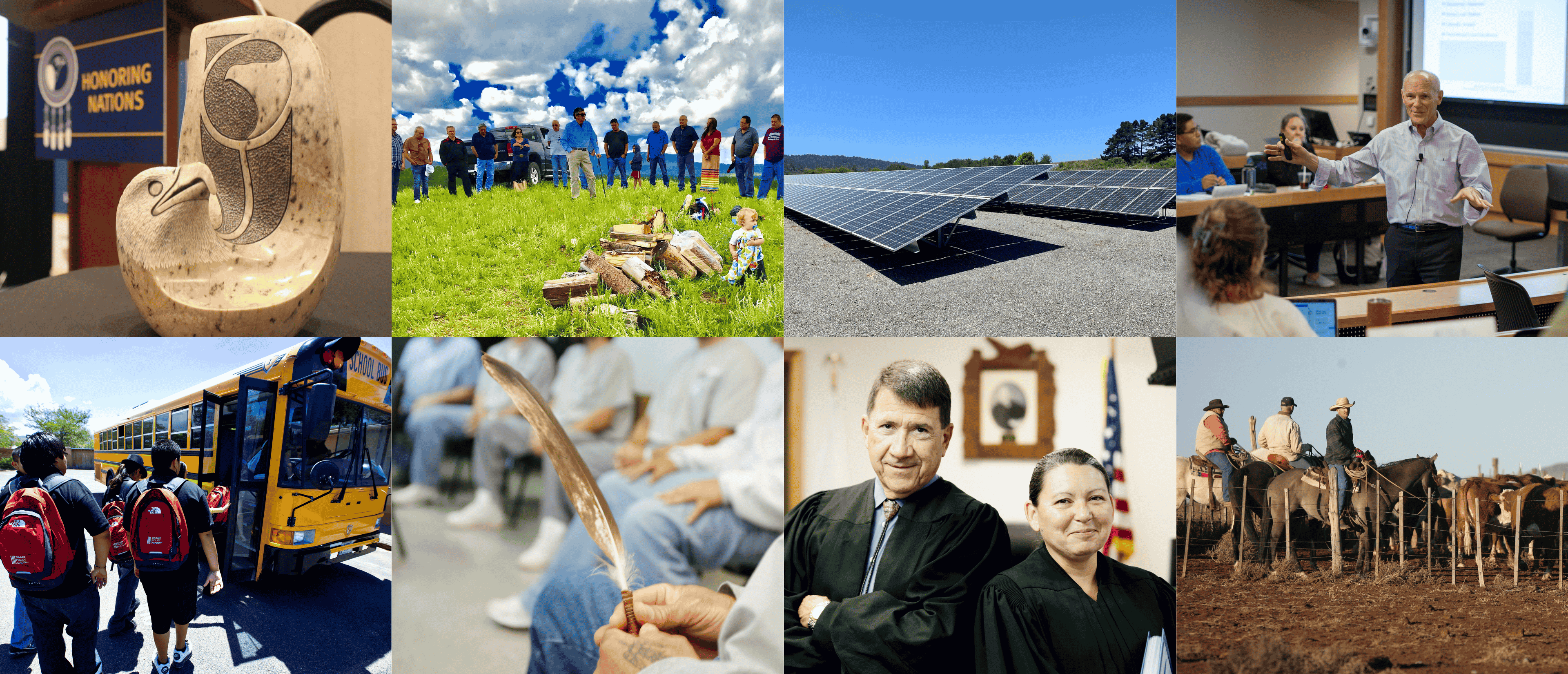
Based on research from the Harvard Project on Indigenous Governance and Development’s Honoring Nations awards program for excellence in tribal self-governance, this article explores several examples of tribal governance innovations from Native nations in the U.S. that advance these development goals.
With the end of the decade rapidly approaching, the 17 Sustainable Development Goals (SDGs) from the United Nation’s 2030 Agenda for Sustainable Development still provide key frameworks and targets for many individuals and organizations tackling pressing global challenges.
Based on research from the Harvard Project on Indigenous Governance and Development’s Honoring Nations awards program for excellence in tribal self-governance, this article explores several examples of tribal governance innovations from Native nations in the U.S. that advance these development goals. Because each SDG is complex and has multiple sub-goals, we have selected one exemplary program for each goal that addresses a specific aspect of the overall Goal and that could be adapted to other global contexts.
SDG #1: No Poverty
To fully eradicate poverty, sometimes additional support is needed to address secondary barriers that create gaps between economic development efforts and citizens’ abilities to benefit from them. Longstanding poverty meant that many residents of the Confederated Tribes of the Umatilla Indian Reservation (CTUIR) did not own cars, and one tribal official noted that in some cases, it was more difficult for tribal members to physically get to the job site than to find a job or housing. Through ongoing economic development efforts, CTUIR became one of the largest employers in Eastern Oregon, but limited transportation meant local jobs were out of reach for many tribal citizens and left reservation businesses short of workers and customers. To address this gap, the Tribes created the Confederated Tribes Public Transit program (now called Kayak Public Transit) in 2001, providing both a free bus and a taxi voucher service. The program serves a wide area within and beyond the reservation boundaries and connects with other non-tribal, regional transportation systems. For the last 25 years, Kayak Public Transit has played a critical role in alleviating poverty, promoting stronger intergovernmental relations, and facilitating community engagement.
SDG #2: Zero Hunger
Quapaw Nation Agricultural Programs
For tribal communities, achieving Zero Hunger requires strengthening food sovereignty by creating access to fresh and healthy foods. Drawing on its people’s farming heritage, the Quapaw Nation built an array of agricultural businesses that focus on sustainable crops and humane livestock husbandry, central to which is the first USDA-certified meat processing plant in Indian Country. In addition to job creation and increased economic opportunities, the Quapaw Nation Agricultural Programs have reduced reliance on external food sources and promoted healthy diets for tribal citizens and their neighbors.
SDG #3: Good Health and Well-Being
Sche’lang’en Village Transformational Wrap-Around Program
Good Health and Well-Being require holistic approaches that address multiple dimensions of health at the same time, including family systems. A powerful model of healing and resilience, Sche’lang’en Village is a sober Salish housing community that reunites families and provides comprehensive wrap-around services, including mental health and chemical dependency treatment, family counseling, parenting services, and other needs. By uniting tribal departments, it has become a beacon of hope, restoring family bonds and empowering parents to thrive within a culturally grounded, supportive environment.
SDG #4: Quality Education
College of Osteopathic Medicine at the Cherokee Nation
To improve educational access for Indigenous Peoples and Local Communities (IPLC), tribes have partnered with external educational institutions to build programs that directly address regional needs by training their own community members. For example, the Cherokee Nation partnered with Oklahoma State University to open the first tribally affiliated medical school in the US, simultaneously improving access to medical care and education for its citizens and building a pipeline of doctors for the region. The school champions culturally competent care and prepares doctors to serve tribal, rural, and underserved communities—transforming both health and education outcomes for generations. This kind of partnership between a government and a university to address a regional staffing gap is a new model that serves community needs and asserts tribal sovereignty at the same time.
SDG #5: Gender Equality
Task Force on Violence Against Women
One aspect of achieving overall Gender Equality means that gender-based violence must be eradicated. American Indian women face alarmingly high rates of violence, and the 2000 Violence Against Women Act (VAWA) failed to adequately address this as it lacked tribal-specific legislation and was subject to jurisdictional challenges. National Congress of American Indians created the Task Force on Violence Against Women in 2003 which included Native leadership and over five hundred grassroots coalitions and organizations to educate Congress and advocate for the protection of Native women. This coordinated movement led to the 2005 re-authorization of VAWA, which now included financial resources and protection for Native women.
SDG #6: Clean Water & Sanitation
Pueblo of Sandia Water Quality Standards
Tribal Nations have empowered their communities to understand and address their Water, Sanitation, and Hygiene (WASH) needs through education, clear environmental standards, and reassertion of cultural values through tribal sovereignty. Responding to the severe contamination of the Rio Grande River that threatens both human health and ceremonial uses of the water, the Pueblo of Sandia was awarded “treatment as state” status in 1990. Subsequently, the Pueblo developed and implemented U.S. EPA approved water quality standards that give it control over local and regional water issues as well as management of water quality improvement efforts. Most importantly, by having the Pueblo's grade school students tour the river and test its water quality as part of the school science projects, the Pueblo of Sandia is helping to create a new generation of water quality guardians and ensure the program's future success. These independent water quality standards provide a model for other governments to assert their sovereignty and influence regional water planning.
SDG #7: Affordable and Clean Energy
Energy Lifeline Sector Resilience - Low-Carbon Microgrids
Developing Affordable and Clean Energy infrastructure requires culturally informed strategic planning and decision-making about energy distribution. The Blue Lake Rancheria, located in a geographically isolated region of northwest California, has historically been affected by frequent power outages to their transmission lines that have only increased in regularity because of climate change-driven storms. Recognizing that community development efforts benefit from reliable, clean, and reasonably priced energy, the tribe established two award-winning low carbon microgrids that supply residents and businesses with reliable energy, even during emergencies, while also reducing carbon emissions.
SDG #8: Decent Work and Economic Growth
ONABEN: A Native American Business Network
One way to accomplish decent work for all is to support the development of entrepreneurial initiatives, particularly those in communities where access to startup resources can be hard to find. Founded by a consortium of Native Nations in the Pacific Northwest, ONABEN's mission is to increase self-reliance by promoting the diversification of reservation economies through the development of citizen-owned small businesses. ONABEN's programs provide financial counseling, business mentoring, links to tribal efforts, referrals to start-up financing, and access to a network of experienced teachers and business leaders. Its annual Trading at the River conference gathers entrepreneurs, tribal leaders, and business experts to share best practices in small business development. ONABEN has served over 10,000 Native American entrepreneurs since its founding in 1991.
SDG #9: Industry, Innovation, and Infrastructure
Tribal Nations such as the Citizen Potawatomi Nation are at the forefront of thinking about how industry and infrastructure can be built in a sustainable way. Expanding its capacity for economic development and sustainable resource management, the Citizen Potawatomi Nation established the Iron Horse Industrial Park, a 700-acre eco-industrial park on trust land in Oklahoma based on the principles of the circular economy. As one of the first Foreign-Trade Zones with active sites in Indian Country, Iron Horse supports environmental and economic self-determination through international Indigenous trade, positioning the Nation as a leader in tribally governed industrial innovation. The park was designed to recruit manufacturing companies interested in operating within a shared ecosystem; in the eco-industrial park model, companies are encouraged to work together to share resources, reduce waste, and use shared warehouse space and transloading services. Portions of Iron Horse are also designated for renewable energy development, reinforcing the Nation’s focus on sustainable development.
SDG #10: Reduced Inequalities Within and Among Countries
Participatory models of governance such as the Taos Pueblo Priority Process can help address the roots of inequality within a community by sharing decision-making power while rooting processes in traditional cultural values and the exercise of sovereignty. Through community-led participatory workshops, the Taos Pueblo Priority Process defines and implements citizen priorities in policies and programs, especially those whose voices have historically been left out of decision-making. It has led to new laws, leadership changes, and greater civic engagement, affirming the Pueblo’s sovereign right to shape its future.
SDG #11: Sustainable Cities and Communities
Housing that is both resilient and affordable is key for sustainable cities and communities. The Winnebago Tribe of Nebraska has historically struggled with housing shortages for its people, especially the tribe’s rapidly growing middle class. In response, community leaders developed Ho-Chunk Village, a 40-acre master planned community that is transforming the Winnebago Tribe of Nebraska by purposefully providing home-ownership opportunities, integrated rentals for elders, and space for businesses in a walkable community. In developing Ho-Chunk Village, the Winnebago Tribe displays how a tribal government, Native Community Development Corporation (NCDC) nonprofit, and tribal enterprise can work together in creative ways to create sustainable economic development and affordable housing.
SDG #12: Responsible Consumption & Production
Bad River Recycling/Solid Waste Department
Waste management is a key component of the Responsible Consumption & Production SDG, and Tribal Nations such as the Bad River Band of the Lake Superior Tribe of Chippewa Indians have been creating innovative solutions to address it. For hundreds of years, members of the Bad River Band have lived in present-day Wisconsin, harvesting wild rice, hunting, and fishing. Growing pollution from hazardous waste threatens both this sensitive ecosystem and Anishinaabe cultural identity rooted in stories of environmental stewardship. The Bad River Recycling/Solid Waste Department set about creating environmentally sound practices for managing and disposing waste generated on the reservation, ending cycles of harm caused by poor disposal practices. Now, through community-wide education, incentives, and new waste management systems, the Bad River Band citizens live in a clean, safe, and green reservation environment.
SDG #13: Climate Action
Swinomish Climate Change Initiative
Climate Action requires urgency, and Tribal Nations are some of the loudest voices continuing to advocate. After experiencing numerous extreme weather events, the Swinomish Indian Tribal Community (SITC) decided to put in place a far-reaching action plan to prepare for future climate changes. The Swinomish Climate Change Initiative is a comprehensive effort aimed at assessing and responding to any negative impacts on community members, tribal land, and the regional ecosystem. Recognizing that climate change requires cooperative solutions, the tribe helped establish local intergovernmental working groups to address concerns. The Skagit Climate Science Consortium brings together scientists from government and academia to share data and research insights about the local ecosystem, while a strategy advisory group consisting of representatives of Skagit County and neighboring towns addresses inter-jurisdictional developments. On several occasions, the tribe has sent representatives to national gatherings on climate policy and has given testimony on climate issues in Washington, D.C. The tribe also uses these networks to advocate for policies that address climate change and to emphasize federal treaty responsibilities in the context of climate change. Using the latest scientific data as well as community input to protect tribal assets and decide how best to preserve traditional practices, the tribe has found a constructive way to prepare for the disruptive effects of climate change.
SDG #14: Life Below Water
Red Lake Walleye Fishery Recovery Project
To address overfishing and pollution, communities should look at examples from Tribal Nations such as the Red Lake Band of Chippewa Indians that have worked on tackling these issues. The waters and fish of Red Lake in Minnesota are culturally, historically, and economically central to the Red Lake Band, but by the mid-1990s, the walleye population had collapsed from over-fishing. Taking drastic but necessary action, the Band negotiated a consensus arrangement with local fishers and state and federal officials to ban fishing in the lake. Over a ten-year period, the fish recovered at an astonishing rate. The tribally led Red Lake Recovery Project now determines when, how, and who can fish the historic waters from which the Band claims its name.
SDG #15: Life on Land
Inter-Tribal Co-Management of Bears Ears
Because environmental stewardship is a key value for tribal communities, it is vital that they are included in decision-making processes for land management to promote the best possible outcomes for all life on land. In a powerful assertion of sovereignty, leaders from the Hopi Tribe, Navajo Nation, Ute Mountain Ute Tribe, Pueblo of Zuni, and Ute Indian Tribe founded the Bears Ears Inter-Tribal Coalition. Rooted in Indigenous conservation practices, the Coalition and Bears Ears Commission lead land management efforts across 1.9 million acres, advancing sustainable stewardship and reaffirming tribal authority over sacred landscapes. Their Resource Management Plan (RMP) supports the conservation of native plant and animal species through habitat protection and ecosystem restoration, prioritizing the health of culturally important species.
SDG #16: Peace, Justice, and Strong Institutions
Restorative justice initiatives such as the Healing to Wellness Court are key to promoting “peaceful and inclusive societies” as advanced by the SDGs. Born out of a need to create a judicial system that Tulalip citizens can trust and that also prioritizes recovery and restoration, the Tulalip Tribal Court Alternative Sentencing Program supports the development of a safe, healthy, and law-abiding community. Focusing on the mental, physical, and spiritual health of offenders, the Program melds indigenous and therapeutic jurisprudence, providing solutions beyond incarceration. Beginning with the Tulalip Alternative Court and now backed by the entire Tulalip justice system, the nation's strategies for implementing Tulalip law now better reflect the sentiments of one of its traditional sayings, “To pull that canoe, you have to pull together.”
SDG #17: Partnerships for the Goal
Jicarilla Apache Nation’s Water Sharing Agreement
Tribal Nations such as the Jicarilla Apache Nation are leading the way in creating effective intergovernmental collaborations to advance sustainable development. In a historic partnership, the Jicarilla Apache Nation and the state of New Mexico developed a first-of-its-kind water lease agreement with key support from the Nature Conservancy. This agreement allows the Nation to lease up to 200,000 acre-feet of water to New Mexico, enhancing water security for the state, providing ecological benefits for the San Juan River, and affirming Jicarilla Apache’s inherent rights over its natural resources.
_____________________________________________
By asserting their sovereign rights and cultural values around taking care of people and places, Native nations are building innovative solutions that other communities can learn from and adapt to their own contexts.
Contributors: Jael Whitney Brothers (Choctaw Nation of Oklahoma) is the Assistant Director for Honoring Nations at the Harvard Project on Indigenous Governance and Development. Chris DeCoster is a Program Assistant to the Harvard Project on Indigenous Governance and Development.
The views expressed in this article are those of the authors alone and do not necessarily represent the positions of the Ash Center or its affiliates.